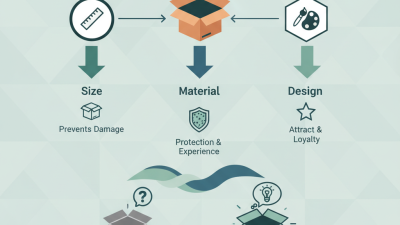
Global shipping has turned the carton into more than a simple container. It is a protective system, a branding surface, and a cost decision. Smithers’ The Future of Corrugated Packaging to 2029 estimates that the global corrugated packaging market will exceed US$200 billion during the forecast period. That growth reflects expanding e-commerce, international trade, and rising expectations for recyclable materials.
For global buyers, effective carton box design must survive real distribution conditions. A box may face humid ports, automated conveyors, long warehouse storage, and repeated handling. ISTA’s 3A testing protocol evaluates vibration, shock, compression, and atmospheric conditioning. These factors deserve attention before approving a sample. A beautiful box can still fail.
McKinsey’s 2023 report, Sustainability in packaging: Inside the minds of global consumers, found that roughly 60–70% of consumers are willing to pay more for sustainable packaging. However, that willingness does not excuse weak performance or excessive material use. The right board grade, accurate dimensions, practical closures, and clear labeling matter more than fashionable claims. Small details matter.
This guide presents seven carton box design tips for buyers comparing suppliers across regions. It considers product weight, stacking strength, moisture exposure, printing accuracy, pallet efficiency, recyclability, and testing evidence. These priorities are not universal. A lightweight cosmetic carton and a heavy industrial component need different solutions. That assumption is often wrong.
Specifications should be verified with samples, transit data, and supplier records. No design survives every route. A thoughtful review can reduce damage, wasted space, and avoidable redesigns before production begins.

7 Carton Box Design Tips for Global Buyers
Define Product, Shipping, and Market Requirements
Start with the product, not the carton. Record its weight, dimensions, fragility, surface finish, and moisture sensitivity. A ceramic item needs cushioning. A metal part may need corrosion protection. I still see teams choosing board strength before checking product behavior.
Use internal dimensions carefully. Allow space for cushioning, but avoid unnecessary air. The World Economic Forum reports that packaging contributes significantly to e-commerce delivery waste, making right-sizing commercially important. Also measure pallet patterns early. A beautiful box can waste an entire pallet layer.
Choose board grade according to stacking and climate conditions. Test compression, vibration, drops, and humidity exposure. ISTA testing provides practical shipment simulations, but laboratory results cannot replace real route trials. That gap is often underestimated.
Global shipping needs stronger decisions. The Pitney Bowes Parcel Shipping Index recorded about 161 billion parcels worldwide in 2022, with volumes projected to reach 256 billion by 2027. More parcels mean more automated handling and repeated impacts. Design for conveyor movement, corner drops, and temporary warehouse stacking.
Plan market requirements before artwork. Check language, recycling symbols, handling marks, barcode contrast, and extended producer responsibility rules. Requirements differ across countries and can change. Do not assume one carton works everywhere.
Control print coverage and ink selection for scuff resistance. Keep critical information away from fold lines. Finally, request samples from production tooling, not only digital renders. The first sample may expose weak flaps, poor fit, or confusing graphics. That is useful evidence, not failure.
For global buyers, carton style and material strength should match the shipment’s real journey. A small retail carton may suit a clean warehouse route, while a regular slotted carton handles mixed distribution better. For long-distance freight, use double-wall board when stacking, vibration, or humidity is likely. The Food and Agriculture Organization reported global paper and paperboard production at about 417 million tonnes in 2022, showing the scale of this material sector. Yet more material does not always mean better protection.
Tip: Measure the product, void space, and pallet pattern before choosing a carton. A box that is too large can collapse under top-load pressure. A tight fit can damage corners during impact. Ask the supplier for edge crush test and bursting strength values, not only a vague “heavy-duty” label. In humid ports, moisture-resistant board may be more useful than simply increasing board thickness.
Tip: Match the carton style to handling conditions. A full-overlap carton offers stronger vertical support than a basic slotted style. For automated packing, confirm flap dimensions and folding accuracy. International Safe Transit Association test procedures can help simulate vibration, drops, and compression before production. One packaging transport study found that poorly designed secondary packaging can increase product damage by more than 20 percent, although results vary by product and route.
Do not trust laboratory strength alone. Real shipments are messier. Test filled cartons on the intended pallet, including weak corners, uneven stacking, and damp storage. A practical trial may reveal flaws that a specification sheet misses.
Edge Crush Test (ECT) measures the stacking strength of corrugated board in pounds per linear inch. Higher ECT grades generally provide better resistance to compression during pallet stacking and long-distance shipping. Select the carton style according to the product shape, while choosing the board strength according to product weight, stacking height, humidity, and transport conditions.
Measure the product, not the empty space. Keep internal clearance tight, but allow room for cushioning. Pitney Bowes’ 2023 Parcel Shipping Index recorded 161.8 billion global parcels in 2022. Small dimensional savings can scale quickly.
Use tip one: match box length, width, and height to the packed item.
Tip two: reduce unused volume.
Tip three: place fragile parts away from corners.
Tip four: select board strength according to product weight, humidity, and travel distance.
A stronger board is not always better. It can increase cost and shipping weight without improving protection. Transit trials often reveal this mistake.
Design the carton for stable stacking, not attractive appearance. Tip five: keep the base flat and avoid irregular flaps. Tip six: align vertical edges between cartons.
ISO 12048 compression testing can evaluate stacking performance under controlled pressure. Add edge protection when pallets face long storage periods.
Tip seven: test filled cartons through vibration, drops, compression, and temperature changes.
ISTA procedures provide useful transport-testing frameworks. FEFCO industry data places Europe’s paper-packaging recycling rate above 80%, so recyclable fiber choices support practical recovery systems. However, recycling claims need local verification.
A box may perform well in a warehouse but fail after rain, poor pallet alignment, or repeated handling. Real shipments are messier. Use pilot shipments, inspect damaged corners, and revise dimensions before approving large production.
7 Carton Box Design Tips for Global Buyers
Prepare Global Printing, Labeling, and Compliance Details
Global carton design starts with accurate destination information. Confirm the importing country, sales language, carton size, and shipping conditions. One carton may need multiple language panels. Keep translations clear, consistent, and professionally reviewed. Do not rely on automatic translation alone. Small wording errors can delay customs clearance or confuse users.
Printing details also require discipline. Specify the color system, ink type, material grade, and approved artwork file. Request a physical proof before mass production. Check barcode readability, contrast, logo placement, and small text under warehouse lighting. Include batch codes, product quantity, dimensions, weight, handling symbols, and recycling information where required. Regulations vary by market, and they can change.
Compliance checks should match the destination, product category, and packaging material. Ask a qualified local advisor to verify mandatory marks and documentation. Keep signed artwork approvals, test reports, supplier records, and revision dates. This creates a traceable process. It also helps resolve disputes.
A perfect file is rarely perfect. Fold lines may shift slightly during production, so protect critical text from creases and edges. Review a packed carton, not only a flat sample. Leave space for future regulatory updates. That space is often forgotten. Before shipment, compare the printed carton with the approved file and destination checklist. One overlooked symbol can cost more than a careful review.
Global carton buyers should treat packaging as a tested system, not a decorative box. A practical design process starts with the product, route, climate, and handling points. Record carton dimensions, board grade, flute type, gross weight, and pallet pattern. Then test prototypes under compression, vibration, drops, and humidity. ISTA procedures offer structured methods for simulating distribution risks.
Measure every failure. A crushed corner may indicate weak stacking, while shifted products can reveal excessive internal space. Adjust one variable at a time. This makes results easier to compare. It also prevents expensive guesswork.
A useful reflection is simple: the first prototype may look excellent and still perform poorly.
We have seen attractive cartons fail after damp storage or repeated handling.
Standardization should follow testing, not replace it. Create approved specifications for materials, tolerances, print areas, closure methods, and inspection points.
The World Bank’s What a Waste 2.0 estimated 2.01 billion tonnes of municipal solid waste in 2016, with growth toward 3.40 billion tonnes by 2050. UNEP’s Global Waste Management Outlook 2024 projects global waste could reach 3.8 billion tonnes by 2050.
Smaller cartons, fewer inserts, and right-sized packaging can reduce material use, but only when protection remains reliable.
Review performance quarterly. Markets change. So do transport conditions.