How to Design Shipping Boxes for Maximum Protection and Cost Efficiency?
In today's competitive market, knowing how to design shipping boxes effectively is crucial for businesses. Expert Anne Richards, a leading authority in packaging design, emphasizes, "The right box can save money and protect your product." This statement captures the essence of designing shipping boxes that ensure both safety and cost-effectiveness.
Many businesses overlook the importance of packaging. Poorly designed boxes can lead to damaged goods, resulting in higher costs and unhappy customers. The materials chosen and the structure of the boxes play a significant role in their effectiveness. Consideration of the product's size and fragility is vital, but many overlook these details in pursuit of cheaper options.
Additionally, sustainability is becoming increasingly relevant. Using eco-friendly materials can reduce costs and appeal to environmentally conscious consumers. It's essential to find a balance that meets the needs of the product while being mindful of costs. As businesses strive to improve, the need for better research in box design becomes clear. How we design shipping boxes may need reevaluation to ensure maximum efficiency and protection.

Understanding the Basics of Shipping Box Design for Protection
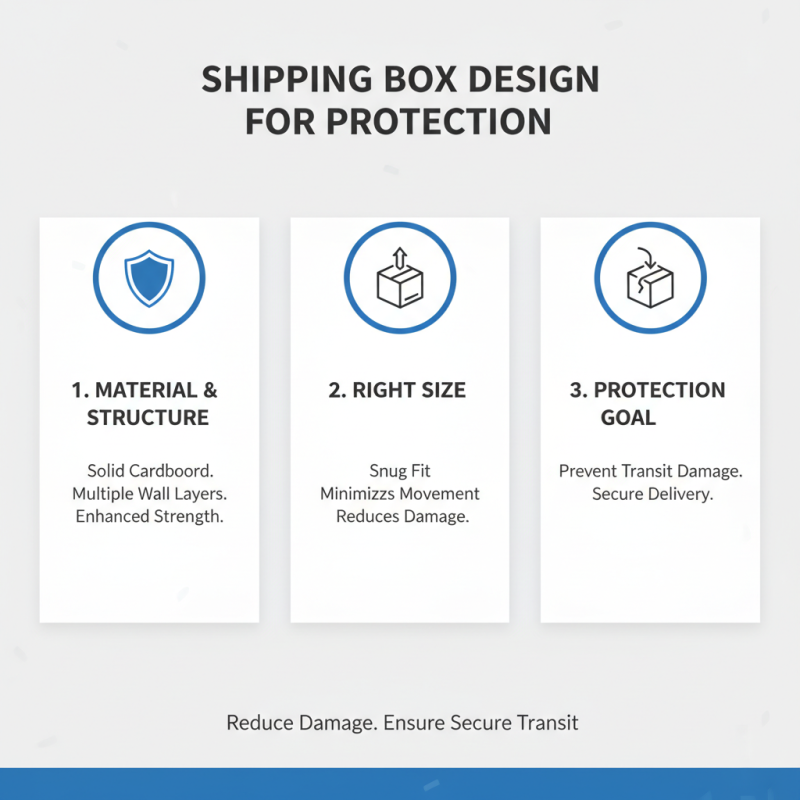
When designing shipping boxes, it's crucial to focus on protection. The right materials and structure can significantly reduce damage during transit. A solid cardboard composition, often with multiple wall layers, enhances strength. Using the appropriate size for your products is also essential. Boxes that are too large allow for movement, leading to potential damage.
Consider the box's edges and corners. Reinforced corners are essential in preventing crushing. Additionally, internal cushioning can help absorb shocks. Using biodegradable packing peanuts or paper can be both eco-friendly and effective. However, overstuffing can lead to insufficient protection and create waste. Balancing between adequate cushioning and material efficiency is critical.
Reflecting on past designs can offer insights. Have some boxes failed during shipping? Analyzing those instances can lead to better designs. Testing prototypes before mass production is also beneficial. Consider real-world scenarios where box integrity is challenged. By prioritizing protection through thoughtful design, you can optimize both safety and cost efficiency.
Choosing the Right Materials for Durable and Cost-Effective Packaging
When designing shipping boxes, choosing the right materials is crucial.
Cardboard is a common choice due to its lightweight nature and strength. However, it lacks moisture resistance.
For fragile items, you might consider using expanded polystyrene.
It's durable and absorbs shocks well. But, it can be costly and difficult to recycle.
Balancing durability and cost is not always straightforward.
Another option is using biodegradable materials.
They offer an eco-friendly touch without compromising protection. Yet, they may not be available in all markets. Assessing local supply chains is essential for efficiency.
The thickness of the material also plays a role. Thicker cardboard can provide better protection but may increase shipping costs.
Always test different packaging solutions. What works well for one product might fail for another. Understand the nature of your items.
This allows for optimal choices. Analyze your shipping method too.
Ground transport may require different materials than air freight.
Making informed choices elevates your packaging strategy. Use prototypes to gather feedback. It highlights any weaknesses early in the process.
Evaluating Box Dimensions for Optimal Space and Protection
Choosing the right box dimensions is crucial for ensuring product safety and minimizing costs. According to a recent study by the Packaging Association, approximately 30% of shipping damage results from inadequate box sizes. A box that is too large can lead to excessive movement, increasing the risk of breakage. Similarly, a box that is too small can cause compression, leading to product deformity.
To optimize space and protection, companies often rely on dimensional weight pricing. This pricing model considers both the size and weight of a package. A report from the International Warehouse Logistics Association highlights that 60% of shippers overlook box dimensions, potentially driving costs up. Finding the right balance in box size can significantly reduce shipping expenses while enhancing safety.
Utilizing custom-fit boxes is another effective strategy. Studies indicate that custom-sized boxes can reduce shipping costs by up to 20%. However, many businesses still use standard sizes, missing out on potential savings. Consider exploring more tailored solutions that account for your product’s dimensions. Being attentive to these factors can lead to better protection and a more cost-efficient shipping process.
Incorporating Cushioning Solutions to Prevent Damage During Transit
Designing shipping boxes requires careful consideration of cushioning solutions to prevent damage during transit. Effective cushioning absorbs shocks and vibrations. Use materials like bubble wrap, foam inserts, or biodegradable packing peanuts. Each option offers unique benefits and can be tailored to fit various types of products.
When choosing materials, think about the weight and fragility of the items. Some packing solutions might be too bulky for lightweight items. Others may not provide enough protection for fragile goods. It’s essential to strike a balance. Trial and error might help identify the best solution for your specific needs.
Over-packing can lead to increased shipping costs, while under-packing risks damage. Aim for a right-sized box with adequate cushioning. Not every box will perform well in all situations. Learn from past experiences and adjust your packing methods accordingly. Aiming for both protection and cost efficiency is an ongoing process.
How to Design Shipping Boxes for Maximum Protection and Cost Efficiency?
| Dimension |
Material Type |
Cushioning Solution |
Weight Capacity (lbs) |
Cost per Box ($) |
| 12"x12"x12" |
Corrugated Board |
Foam Inserts |
40 |
1.50 |
| 10"x10"x10" |
Double Wall Cardboard |
Bubble Wrap |
30 |
1.20 |
| 14"x10"x5" |
Heavy Duty Cardboard |
Paper Void Fill |
25 |
0.90 |
| 16"x12"x12" |
Single Wall Cardboard |
Air Pillows |
50 |
1.80 |
| 18"x18"x18" |
Reinforced Cardboard |
Peanuts |
60 |
2.00 |
Balancing Cost Efficiency with Sustainability in Shipping Box Production
Sustainability in shipping box production is more critical than ever. Recent studies indicate that approximately 30% of packaging waste originates from e-commerce operations. As businesses aim for cost efficiency, many overlook the environmental impact of their choices. Utilizing recycled materials can reduce production costs and help minimize waste. Reports show that using 100% recycled paperboard can cut down CO2 emissions by 66%.
Balancing cost with sustainability demands innovative design strategies. Optimizing box size can lead to reduced material use and lower shipping costs. In fact, companies that implement right-sizing strategies see an average of 20% reduction in packaging expenses. However, achieving this balance requires careful consideration. Companies might face challenges when integrating new sustainable materials. The upfront costs may deter investment despite long-term savings. This tension highlights the importance of commitment to sustainable practices.
Reducing the environmental footprint while maximizing protection is not straightforward. The trend toward eco-friendly materials can sometimes compromise durability. Inadequate packaging can lead to product damage, resulting in returns and lost revenue. A deeper understanding of material properties and environmental implications is essential for effective design. Attention to these factors can enhance both protection and sustainability in shipping.
Shipping Box Design: Cost Efficiency vs. Protection