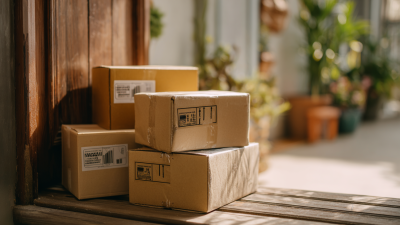
Why Choose Shipping Boxes for Home Delivery Worldwide?

Choosing the right shipping boxes for home delivery worldwide is more than a matter of appearance. It affects product safety, delivery costs, customer trust, and environmental impact. A strong box should fit the item closely, resist compression, and protect contents from rain, dust, and repeated handling. Yet no package is perfect.

Packaging expert Lisa McTigue Pierce offers a useful perspective: “Packaging communicates before anyone speaks.” That message begins when a customer lifts a clean, sturdy carton from the doorstep. With suitable shipping boxes home, retailers can reduce movement inside the package, limit damage, and create a more reliable unboxing experience. Simple details matter. A snug insert. Reinforced corners. Clear handling information.

Worldwide delivery adds more pressure. Parcels may cross several climates, warehouses, and transport systems before reaching a household. Double-wall corrugated boxes can support heavier products, while lightweight single-wall options may suit books, clothing, or small accessories. Choosing oversized packaging, however, can increase material use and shipping charges. Smaller is often better, but not always safer.

Practical experience also exposes a weakness in many packaging plans: one box size rarely serves every order. Products change. Return journeys happen. Customers notice waste. A thoughtful shipping strategy should test box strength, measure internal space, and review damage reports regularly. It should also consider recyclable materials and responsible sourcing.

The best shipping boxes home are not simply cheap containers. They are quiet quality controls. They protect the product, respect the customer’s space, and support dependable delivery across borders. Careful testing remains essential, because assumptions can fail in transit.
Why Choose Shipping Boxes for Home Delivery Worldwide?

What Are Shipping Boxes for Home Delivery?

Shipping boxes for home delivery are protective containers designed to move products from a seller or warehouse to a customer’s door. Most use corrugated cardboard, which combines a fluted inner layer with flat outer sheets. This structure absorbs pressure while keeping the box relatively light. The box should fit the item closely, with enough space for cushioning material.

A suitable shipping box also supports practical handling. Strong flaps close with packing tape, and clear labels help carriers identify the destination. For international delivery, the box may face rain, humidity, rough sorting equipment, and repeated movement. I have found that double-wall cardboard works better for heavier items, while single-wall boxes suit many lightweight products. Oversized boxes often create problems because the contents can shift inside.

Packing tests can reveal weaknesses that look invisible at first. A box may seem strong on a clean table but fail after several drops or when stacked under heavier parcels. I once used too much empty space around a fragile product, and the inner protection moved during transport. That mistake changed my packing routine. Now I check the item’s weight, shape, and movement before sealing the package. Still, no box is perfect for every delivery route, so material choice and careful testing remain important.

Why Choose Shipping Boxes for Home Delivery Worldwide?

What Are Shipping Boxes for Home Delivery?

Shipping boxes are protective outer packages designed to move products safely from sellers or fulfillment centers to residential addresses. The worldwide parcel volume increased substantially between 2018 and 2023, showing the growing importance of durable, lightweight, and appropriately sized boxes for home delivery. Well-designed shipping boxes help reduce product damage, simplify handling, and improve transportation efficiency.

Why Shipping Boxes Matter for Safe Home Delivery

Shipping boxes matter because the last journey is rarely gentle. A parcel may face conveyor drops, stacking pressure, vibration, rain, and hurried doorstep placement. International Safe Transit Association testing evaluates impact, compression, vibration, and atmospheric exposure. These tests make “sturdy packaging” measurable. In practice, a correctly sized carton, corner cushioning, and tight internal fit can prevent products from sliding into the walls. Small details matter.

The 2023 Global Parcel Shipping Index recorded about 161 billion parcels worldwide in 2022. Each shipment creates another chance for crushed corners, torn seams, or moisture damage. A double-wall box may suit heavier goods, while a single-wall carton can protect compact items. That choice should follow weight, dimensions, and route length, not habit. Overfilled boxes are common in packing rooms. Their flaps bow before shipping begins. The box looks strong, but its structure has already weakened.

Protection must also consider waste. The U.S. Environmental Protection Agency reported a 68.2 percent recycling rate for paper and paperboard in 2021. Right-sizing reduces empty space, filler, and transport volume, although one carton cannot solve every environmental problem. A 2023 returns report from the National Retail Federation estimated U.S. merchandise returns at 14.5 percent of retail sales. Damaged deliveries can add to that burden. Clear labels, moisture-resistant surfaces, and repeatable packing checks improve reliability. No carton is perfect. A final shake test remains simple, imperfect, and useful.

How to Choose the Right Shipping Box Size and Material

Why Choose Shipping Boxes for Home Delivery Worldwide?

Choosing the right shipping box starts with accurate measurements. Measure the item’s length, width, and height before adding protective material. Keep it snug. A box with excessive empty space needs more cushioning and may collapse during handling. Leave enough room for paper, foam, or another suitable protective layer. Measure twice.

In practical packing tests, a box that fits closely usually moves less inside the package. This reduces corner damage and surface scratches. Corrugated cardboard works well for many household deliveries because its fluted layers absorb pressure. Choose a stronger, double-wall structure for heavy items, long-distance routes, or stacked parcels. Lightweight products may need only a single-wall box. Overpacking is not always safer.

Material choice should also reflect weather and storage conditions. High humidity can weaken ordinary cardboard, especially when parcels wait in damp areas. Consider moisture-resistant treatment when the route includes rain or tropical climates. Recycled content can reduce material use, but strength still matters. A weak box is a false saving. I once approved a box that looked sturdy, yet its corners softened after exposure to moisture. That mistake changed our inspection process. Check seams, edges, and compression strength before regular use. Drop and vibration tests can reveal failures that appearance hides. Local delivery rules, recycling systems, and carrier limits should also influence the final box choice.

Why Choose Shipping Boxes for Home Delivery Worldwide? - How to Choose the Right Shipping Box Size and Material
Comparison of shipping box sizes, materials, applications, and selection criteria for worldwide home delivery.
Box Category Typical Internal Size
(L × W × H)
Approximate Capacity Recommended Contents Suitable Material Typical Protection Level Best Use in Home Delivery Important Selection Considerations
Small Parcel Box 8 × 6 × 4 in
(20 × 15 × 10 cm)
Up to approximately 5 lb
(2.3 kg)
Books, cosmetics, small accessories, cables, and compact household items Single-wall corrugated board, usually 32 ECT or equivalent strength Good for lightweight, non-fragile products when void space is limited Low-cost parcel shipments and small international orders Choose a snug fit to reduce movement. Add paper padding or air pillows for delicate contents.
Medium Parcel Box 12 × 10 × 8 in
(30 × 25 × 20 cm)
Approximately 5–15 lb
(2.3–6.8 kg)
Clothing, footwear, kitchen goods, toys, and multiple small products Single-wall corrugated board with a medium-strength kraft liner Good balance of rigidity, weight, and protection for routine transport General home delivery through parcel networks Measure the packed product, not only the product itself. Leave room for cushioning without overpacking.
Large Parcel Box 18 × 14 × 12 in
(46 × 36 × 30 cm)
Approximately 15–30 lb
(6.8–13.6 kg)
Small appliances, bundled clothing, household supplies, and several retail items Double-wall corrugated board for increased compression and stacking strength Higher resistance to crushing and handling stress than single-wall board Consolidated orders and heavier household shipments Use reinforced tape and protect corners. Check the carrier’s dimensional-weight rules before shipping.
Flat-Pack Mailer 13 × 10 × 2 in
(33 × 25 × 5 cm)
Up to approximately 4 lb
(1.8 kg)
Documents, apparel, notebooks, thin electronics, and flat retail products Folding corrugated mailer or rigid paperboard, depending on product fragility Good surface protection with limited depth and moderate edge protection Space-efficient delivery of flat or flexible products Do not use for bulky items. A rigid insert can help prevent bending during sorting.
Heavy-Duty Box 16 × 12 × 12 in
(41 × 30 × 30 cm)
Approximately 30–50 lb
(13.6–22.7 kg)
Tools, dense hardware, books, cookware, and other heavy products Double-wall or reinforced corrugated board with strong kraft liners High resistance to compression, puncture, and repeated handling Dense or heavy products shipped over long distances Keep weight evenly distributed. Use high-strength tape and avoid oversized empty areas.
Fragile-Product Box 14 × 12 × 10 in
(36 × 30 × 25 cm)
Approximately 10–20 lb
(4.5–9.1 kg)
Glassware, ceramics, small electronics, ornaments, and sensitive equipment Double-wall corrugated board with molded pulp, foam, or honeycomb inserts High protection when the product is immobilized and separated from the walls International delivery where parcels may experience vibration and repeated transfers Maintain cushioning on all sides. The contents should not move when the sealed box is gently shaken.
Moisture-Resistant Box 12 × 10 × 8 in
(30 × 25 × 20 cm)
Approximately 5–15 lb
(2.3–6.8 kg)
Products exposed to humidity, condensation, or short periods of wet handling Coated corrugated board or standard corrugated board with a waterproof outer mailer Improved resistance to surface moisture; not fully waterproof unless sealed as a system Rainy routes, humid climates, and multi-stage international transport Use an internal sealed bag for moisture-sensitive products. Keep the box away from direct water exposure.
Custom-Fit Box Product dimensions plus 1–3 in
(2.5–7.6 cm) total clearance
Based on the product and protective packaging Irregular, premium, fragile, or high-value products Corrugated board selected according to product weight, stacking needs, and shipping distance Very good when the internal fit, inserts, and closure are designed for the product Reducing damage, void fill, and dimensional shipping charges Measure length, width, and height after protective wrapping. Validate the design with drop and compression testing.
Return-Friendly Box Varies by product; commonly 12 × 10 × 6 in
(30 × 25 × 15 cm)
Approximately 5–15 lb
(2.3–6.8 kg)
Apparel, footwear, consumer goods, and products with frequent returns Single-wall or lightweight double-wall corrugated board with a dual adhesive strip Good for repeated opening and resealing when the board remains undamaged Retail and e-commerce deliveries that may be sent back by the customer Include clear opening instructions and ensure the return closure remains secure during transit.
Export-Ready Box Varies according to cargo; commonly 18 × 14 × 12 in
(46 × 36 × 30 cm)
Approximately 15–40 lb
(6.8–18.1 kg)
Products traveling through multiple hubs, warehouses, and customs inspections Double-wall corrugated board with water-resistant outer packaging and reinforced sealing High protection against compression, abrasion, and extended handling Long-distance and worldwide home delivery Use durable labels, a complete address, internal packing documentation, and packaging suitable for stacking.

What Features Support Worldwide Shipping?

Shipping boxes make home delivery practical because they protect products through many handoffs. In my packing work, I have seen corners soften after rain, stacking, and long transfers. A strong box needs the right board strength, not simply a thick appearance. Double-wall construction suits heavier items, while lighter products may need less material. Internal space matters too. Excess room invites movement. Tight packing can crush delicate contents. The best fit is stable, not forced.

Worldwide shipping also demands moisture resistance and reliable closure. A water-resistant outer layer helps during loading near wet docks or snowy roads. Strong seams reduce splitting when parcels are lifted by one edge. Clear handling information supports consistent treatment, although labels can peel or fade. Boxes should remain easy to identify after dust and abrasion. Size and weight should match carrier limits, destination requirements, and product needs. These details reduce damage, delays, and unnecessary repacking. They do not remove every risk.

Tips: Test a packed box with gentle corner drops and short stacking trials. Check the bottom before sealing. Use cushioning that prevents shifting, not just extra filling. Photograph the packed parcel for quality records. I once trusted a neat-looking carton too quickly; its lower seam opened during a vibration test. That mistake changed my checklist. Packaging advice should be reviewed regularly, because climates, routes, and products vary. A practical trial often reveals weaknesses that specifications miss.

How to Pack and Label Boxes for International Delivery

Why Choose Shipping Boxes for Home Delivery Worldwide?

How to Pack and Label Boxes for International Delivery

A strong shipping box begins with the item, not the label. Choose a box that leaves limited space around the product. Too much room allows movement. Too little space creates pressure on fragile edges. Use clean, durable cardboard with intact corners. Double-wall construction can help with heavier household items.

Wrap each item separately, then fill empty areas with cushioning material. Test the package by gently shaking it. Nothing should shift. Seal every opening with strong packing tape, including the bottom seam. I sometimes add an extra strip there, because rushed packing can overlook weak corners. Keep the parcel’s weight balanced. An uneven box may tip during handling.

Write the recipient’s complete name, street address, postal code, city, country, and contact number clearly. Print the details on a flat surface, and place a duplicate address sheet inside. Use a waterproof label cover when rain or condensation may occur. Remove old labels and barcodes. They can confuse sorting equipment. Customs information must describe the contents accurately, including quantity, value, and purpose. Check the destination’s current import requirements before sealing the box. Regulations change, and an assumption can delay delivery. Avoid vague descriptions such as “goods” or “samples.” Clear wording helps carriers and customs officers process the parcel correctly.