Why Are Reusable Packaging Boxes Better for Shipping?

Reusable packaging boxes are changing how businesses think about shipping. Unlike single-use cartons, they can return to circulation after delivery. This reduces repeated purchasing and may lower packaging waste over time. The strongest benefits appear in closed delivery networks, regular customer routes, and business-to-business shipments.

Ellen MacArthur, founder of the Ellen MacArthur Foundation, describes circular design through a clear principle: “Keep products and materials in use.” Reusable packaging boxes apply that idea in a practical way. They are often made with stronger materials, reinforced corners, and washable surfaces. These features can protect products during repeated handling. They may also reduce damage, repacking work, and disposal costs. Still, durability alone does not prove better performance.

The return journey matters. If empty boxes travel long distances, fuel use can weaken their environmental advantage. Businesses must track collection rates, cleaning needs, storage space, and replacement losses. A box that disappears after one shipment is not truly reusable in practice. That sounds obvious. It is often overlooked.

This article examines why reusable packaging boxes can improve shipping efficiency, product protection, and resource use. It also considers their limits. Reliable decisions require more than attractive sustainability claims. Companies should compare full life-cycle impacts, including manufacturing, transport, washing, repair, and end-of-life handling. Results will differ by product type and delivery model. Reusable systems are promising, but they are not effortless. Their success depends on thoughtful design, consistent returns, and honest measurement.
Why Are Reusable Packaging Boxes Better for Shipping?

What Are Reusable Packaging Boxes?

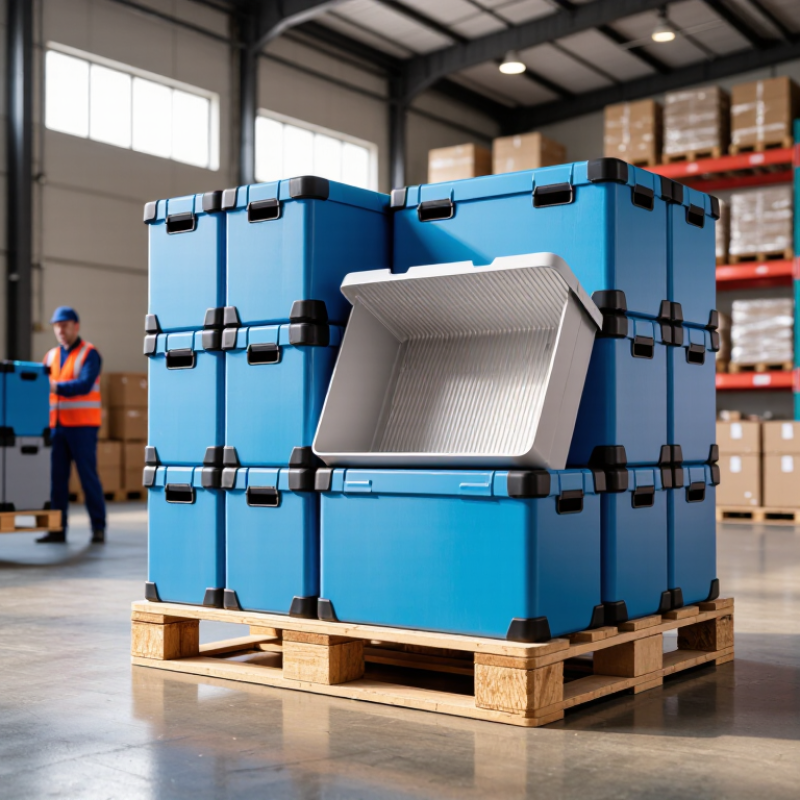
Reusable packaging boxes are shipping containers built for repeated trips, not one delivery. They often use molded plastic, durable fiberboard, or reinforced corrugated materials. ISO 18603:2013 describes reusable packaging as packaging designed for multiple trips within a reuse system. That system needs collection, inspection, cleaning, repair, and redistribution. Without those steps, a durable box is only a stronger disposable box.

The scale of packaging waste makes this important. The U.S. Environmental Protection Agency reported 82.2 million tons of containers and packaging in municipal solid waste in 2018, representing 28.1% of total generation.

The Ellen MacArthur Foundation’s reuse research also stresses return rates, transport distance, and cycle numbers. A box must survive enough journeys to repay its manufacturing impact. The awkward truth: one lost box can weaken the environmental case. A life-cycle assessment may look excellent on paper, yet fail in a scattered delivery network.

Tips: Track every box with a simple code. Record trips, damage, cleaning time, and return distance. Test a small route first. Check corners after each delivery. Do not assume heavier means better; unnecessary weight increases transport emissions. In practice, the best box is durable, easy to fold, simple to inspect, and convenient for customers to return. Teams should review the data monthly, because early assumptions are often wrong.

How Reusable Packaging Boxes Work in Shipping

Reusable packaging boxes work through a controlled shipping cycle, not a single delivery. A warehouse folds each box, checks its hinges, and places products inside protective inserts. Workers then secure the lid and attach a removable shipping label. The box travels through sorting centers like a standard parcel. Its rigid walls can reduce crushing when cartons are stacked tightly.

After delivery, the customer returns the empty box through a planned collection route. Some systems use scheduled pickups, while others rely on return points near regular delivery areas. A tracking code records each box’s location and number of completed trips. This information helps logistics teams identify delays, losses, and repeated damage. Small details matter. A loose latch can expose a product during transit.

At the inspection site, staff remove old labels and check corners, seams, and closures. They clean the surface, replace worn parts, and test the box before shipping it again. This creates a practical reuse loop. However, reusable packaging is not automatically more efficient. Empty return trips can add fuel use, and poorly designed boxes may cost more to handle. Operations teams should compare return distances, repair rates, cleaning needs, and box lifespan. I have found that simple designs often perform better than clever ones. The process still needs adjustment.

Key Environmental Benefits of Reusable Packaging

Why Are Reusable Packaging Boxes Better for Shipping?

Key Environmental Benefits of Reusable Packaging

Reusable packaging boxes can reduce the steady flow of cardboard and plastic waste from shipping operations. A disposable box may serve one delivery, then sit beside a loading dock as waste. A durable box can protect products through dozens of journeys. Its reinforced corners resist crushing, while fitted inserts reduce the need for extra wrapping. Less material often leaves the warehouse with each order.

The environmental benefit grows when return routes are planned carefully. Empty boxes can travel back on scheduled delivery vehicles instead of making separate trips. This lowers unnecessary fuel use and reduces carbon emissions. Reusable packaging also needs fewer raw materials over time. Manufacturing demands energy, water, and transport, so extending a box’s useful life matters. In practice, warehouse teams should track return rates, damage, cleaning needs, and the number of completed cycles.

They are not automatically greener.

A reusable box that travels hundreds of empty miles may create more emissions than a lightweight disposable option. Cleaning can also consume water and electricity. A credible assessment must examine the full lifecycle, not only the number of reuses. Box weight, material durability, local transport, and customer behavior all influence the result. I have found that return instructions are easy to overlook. Clear labels and convenient collection points can improve participation, though they rarely work perfectly. Even a small return-rate problem deserves attention.

Cost and Operational Advantages for Businesses

Reusable packaging boxes can reduce shipping costs when they survive many delivery cycles. A warehouse team may spend less on replacement cartons, tape, and filler materials. Durable walls also protect products during loading, sorting, and last-mile handling. In practice, savings depend on return rates, cleaning needs, and storage space. A box used only twice may not justify its higher purchase price. That detail is easy to overlook.

Operational gains often appear at packing stations. Standardized box sizes make carton selection faster and simplify shelving. Workers can stack empty boxes neatly, while rigid bases reduce crushed shipments. Clear labels and inspection points support consistent quality checks. Reusable containers may also reduce packing waste and collection costs. However, reverse logistics can add labor, fuel, and tracking requirements. If returns arrive late, the operation may need extra inventory. Not every route fits.

Businesses can test the model on a small shipping lane. Record purchase cost, packing time, damage rates, cleaning hours, and return mileage. Compare these figures with single-use packaging over several delivery cycles. A simple cost-per-trip calculation gives a more honest result than the unit price. Staff feedback matters too; awkward handles or heavy lids can slow work. Reusable packaging is not automatically cheaper. Its value grows when boxes circulate often, return efficiently, and fit existing workflows. Measure the real cycle.

Why Are Reusable Packaging Boxes Better for Shipping? - Cost and Operational Advantages for Businesses

Comparison Dimension Reusable Packaging Boxes Single-Use Corrugated Boxes Business Advantage
Purchase frequency Purchased once and used repeatedly Purchased for each outbound shipment Reduces recurring packaging procurement
Typical service life Often designed for dozens to hundreds of trips, depending on material, load, handling, and maintenance Normally intended for one shipping cycle Spreads the initial purchase cost across multiple shipments
Cost structure Higher upfront cost; lower cost per trip after reuse Lower upfront cost per box; repeated purchase cost Can improve total packaging cost when return rates are high
Break-even formula Break-even trips = Reusable box cost ÷ Single-use box cost Cost continues to accumulate with each shipment Provides a simple way to evaluate financial feasibility
Illustrative cost example $24 box used 20 times = $1.20 packaging cost per trip, before reverse logistics and repair $2.00 box used once = $2.00 packaging cost per trip The reusable option is economically favorable in this example if return and handling costs remain below $0.80 per trip
Damage resistance Rigid construction generally provides more consistent protection against crushing and repeated handling Protection decreases when cardboard is exposed to moisture, compression, or repeated handling May reduce product damage, repacking, and customer-service workload
Packing consistency Standardized dimensions and integrated closures support repeatable packing procedures Box condition, tape use, and packing method can vary by shipment Simplifies training and improves process consistency
Warehouse handling May reduce time spent cutting tape, assembling cartons, and disposing of used packaging Requires recurring carton assembly, taping, labeling, and waste handling Can lower labor and consumable usage in high-volume operations
Reverse logistics Requires collection, return transport, tracking, cleaning, inspection, or repair Usually does not require packaging returns Works best in closed-loop, local, subscription, rental, or regular-delivery networks
Storage requirements Often stackable and may require a designated area for empty returns Requires ongoing storage of new cartons and packing materials Can improve space utilization when boxes nest or collapse efficiently
Packaging waste Usually generates less packaging waste per shipment when the box completes multiple trips Generates a new carton and often additional tape or void fill for each shipment Can reduce waste collection, disposal, and recycling activity
Tracking and control Can include barcodes, RFID tags, serial numbers, or deposit controls Usually tracked only as a shipment or order, not as a reusable asset Supports asset visibility and helps identify loss points
Best-fit shipping profile Frequent shipments between known locations with predictable return behavior One-way, long-distance, irregular, or difficult-to-control distribution networks Helps businesses select packaging according to network design
Key financial risk Loss, non-return, cleaning, repair, and reverse-shipping costs Recurring purchase costs, packaging inflation, labor, and disposal costs A total-cost review prevents savings from being overstated

Note: The cost figures shown are an illustrative planning example, not company-specific data. Actual results depend on box price, service life, return rate, transport distance, labor, cleaning, repairs, loss, and disposal costs.

Factors to Consider When Choosing Reusable Packaging Boxes

Why Are Reusable Packaging Boxes Better for Shipping?

Choosing reusable packaging boxes requires more than selecting a strong container. Start with the expected shipping cycle. A box used 20 times may reduce material demand, but only if it survives repeated handling. The U.S. EPA reported 82.2 million tons of containers and packaging entered the municipal waste stream in 2018. Only 28.1% was recycled. This figure shows why durability matters, but reuse is not automatically better. Extra transport, cleaning, and storage can increase emissions. Consider the full life cycle.

Check impact resistance, internal dimensions, empty weight, and repair options. A box that is too large needs more cushioning and truck space. A heavy box may raise fuel use. Hinges, lids, and locking points deserve practical testing. Measure damage after drops, vibration, moisture exposure, and stacking. Industry testing standards from ISTA can help create repeatable shipping trials. Also review reverse logistics. If empty boxes travel hundreds of miles before returning, the environmental advantage may weaken. It happens.

Tips: Calculate the break-even number of uses before purchase. Track return rates, repair costs, and average box life. Choose washable surfaces when hygiene is important, and add simple identification labels for circulation control. Pilot one route first. Real data may challenge the original plan. According to the Ellen MacArthur Foundation’s reuse guidance, system design matters as much as packaging design. A durable box cannot compensate for poor collection and inefficient transport.